Art Therapy: The Journey Behind Neurographic Creations
Art therapy offers a unique path to self-discovery and healing. Among its many forms, neurographic art stands out as a creative process that blends psychology and drawing to unlock the mind’s potential. This post explores the journey behind neurographic creations, explaining how this art form supports emotional well-being and personal growth.

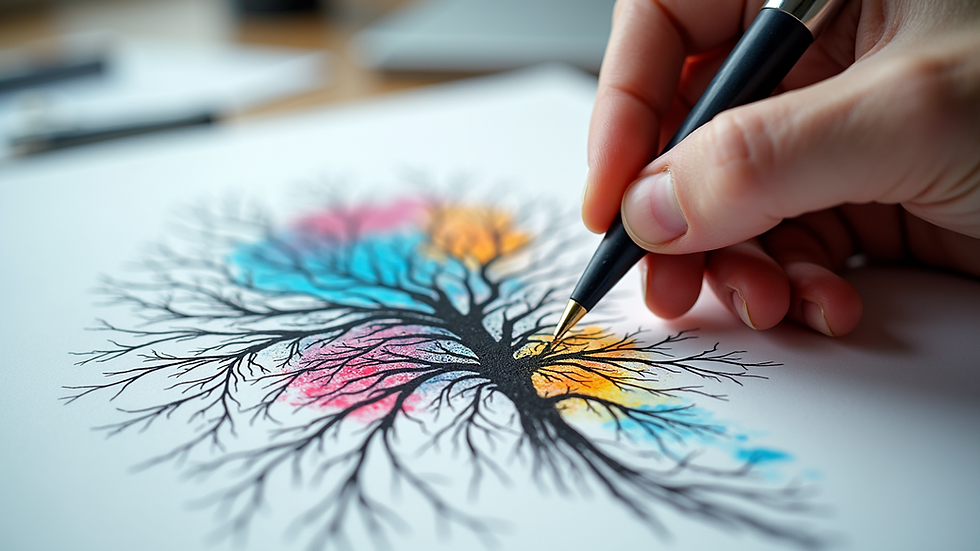
Close-up view of a colorful neurographic drawing with flowing lines and shapes
What Is Neurographic Art?
Neurographic art is a drawing technique developed by psychologist Pavel Piskarev in 2014. It uses spontaneous, flowing lines to represent neural pathways in the brain. The process encourages the artist to connect lines and shapes intuitively, reflecting thoughts, emotions, and subconscious patterns.
Unlike traditional art, neurographic drawing does not require formal skills or planning. Instead, it focuses on the act of creation as a form of meditation and self-expression. The lines often start as random strokes, which the artist then smooths and connects, symbolizing the transformation of chaotic thoughts into clarity.
How Neurographic Art Supports Emotional Health
The practice of neurographic drawing engages both the creative and analytical parts of the brain. This balance helps reduce stress and anxiety by:
Encouraging mindfulness: The repetitive motion of drawing lines helps focus attention on the present moment.
Releasing emotions: The abstract nature of the art allows feelings to surface without judgment.
Promoting problem-solving: Connecting lines mirrors the brain’s way of forming new neural connections, which can inspire fresh perspectives on challenges.
Research in art therapy shows that creative activities like neurographic drawing can lower cortisol levels, the hormone linked to stress. Participants often report feeling calmer and more centered after sessions.
The Step-by-Step Process of Creating Neurographic Art
Creating neurographic art involves several simple steps that anyone can follow:
Start with spontaneous lines: Use a pen or marker to draw freeform, curved lines across the paper. Avoid straight lines or sharp angles.
Connect intersections: Where lines cross, draw smooth curves to connect them, softening the intersections.
Add shapes: Fill spaces between lines with circles, ovals, or other organic shapes.
Color the drawing: Use colored pencils, markers, or paints to add color. Choose hues that reflect your mood or intentions.
Reflect on the artwork: Take time to observe the drawing and notice any thoughts or feelings that arise.
This process can take anywhere from 20 minutes to an hour, depending on how detailed the artist wants to be. The goal is not to create a perfect image but to engage in a meaningful, intuitive experience.
Real-Life Examples of Neurographic Art in Therapy
Many therapists have integrated neurographic art into their practice with positive results. For example:
A counselor working with clients experiencing anxiety found that neurographic drawing helped them externalize worries and visualize solutions.
In group therapy, participants used neurographic art to express shared emotions, building empathy and connection.
Individuals recovering from trauma reported that the process gave them a sense of control and hope by transforming chaotic feelings into structured art.
These examples show how neurographic art can be a powerful tool for emotional healing and communication.
Tips for Beginners to Start Neurographic Drawing
If you want to try neurographic art, here are some practical tips:
Use smooth, flowing lines rather than sharp angles.
Work slowly and breathe deeply to stay relaxed.
Don’t worry about mistakes; they can add character to your drawing.
Experiment with different colors to see how they affect your mood.
Keep a journal to write down thoughts that come up during or after drawing.
Starting with simple exercises, like drawing a few lines and connecting them, can build confidence over time.
The Science Behind Neurographic Art
Neurographic art is based on the idea that drawing lines can influence neural pathways. When you create art, your brain forms new connections, which can change how you think and feel. This process is called neuroplasticity.
By intentionally drawing and connecting lines, neurographic art aims to:
Break negative thought patterns
Encourage creative problem-solving
Improve emotional regulation
While more scientific studies are needed, early evidence supports the benefits of art therapy techniques like neurographic drawing for mental health.
Using Neurographic Art Beyond Therapy
Neurographic art is not limited to therapy sessions. Many people use it as a daily practice for:
Stress relief after work or school
Enhancing creativity in other projects
Setting intentions or goals visually
Exploring personal growth and self-awareness
Because it requires minimal materials and no special skills, neurographic art is accessible to anyone interested in exploring their inner world through creativity.
Neurographic art offers a unique way to connect with your mind and emotions. By drawing flowing lines and shapes, you can transform inner chaos into clarity and calm. Whether you use it for therapy or personal growth, this creative journey invites you to explore your thoughts in a new light.
Try creating your own neurographic drawing today. Notice how the process affects your mood and thoughts. This simple act of art can open doors to deeper understanding and emotional balance.

Comments